How Modern Architecture Firms Approach Mixed-Use Commercial Design
Before the influence of factors like the industrial age, urban sprawl, and the ubiquity of transportation by car, it was common for many buildings and homes to have multiple uses. (Think of apartments above shops or a doctor’s clinic attached to the family home.)
Even though examples like these became rare for a time, now contemporary urban planning and modern commercial architecture are increasingly making use of what is known as “mixed-use design” — in both urban and rural areas.
What is Mixed-Use Design?
Mixed-use design is the inclusion of spaces with different purposes within one site.
When a municipality allows mixed-use development, for example, a design for a specific project may include residential space alongside (or above or below) retail, hospitality, parking, or recreation spaces.
Benefits of Mixed-Use Development & Design
Mixed-use design has been picking up steam in recent years, most likely because it offers a number of benefits for communities. Here are just a few:
- It pairs well with multi-family housing, a growing need as communities get more crowded.
- It can help make neighborhoods more walkable, which yields environmental benefits.
- Mixing uses within one building or area helps reduce strain on infrastructure.
As the American Planning Association puts it, “Mixed-use development provides a variety of environmental, economic, social, and health benefits.”
The Role of Architecture & Design Firms in Creating Meaningful Mixed-Use Spaces
This increase in mixed-use design in commercial architecture and interior design offers a great opportunity for innovative firms to flex their creative problem-solving muscles for the benefit of communities. That’s because mixed-use design is more complex by its nature and, as we’ve already seen, can yield significant benefits.
Rather than simply combining spaces designed separately, architects and interior designers of mixed-use properties must bring together diverse elements in a cohesive way. This means also taking into account:
- Serving a variety of end-users (i.e., residents, visitors, employees, tenants)
- Importance of flow in the layout
- Designing separation between different spaces without disconnection
- Flexibility of design for retrofitting spaces after construction as needed (i.e., vacant retail or dining spaces)
With so many factors involved, early collaboration between architects and interior designers is especially important for successful mixed-use design.
3 Keys for Successfully Approaching a Mixed-Use Design Project
Here are three guiding values our Knoxville architecture firm uses to arrive at an effective mixed-use design. These principles help inform thoughtful, well-integrated projects within any firm:
1. Collaboration
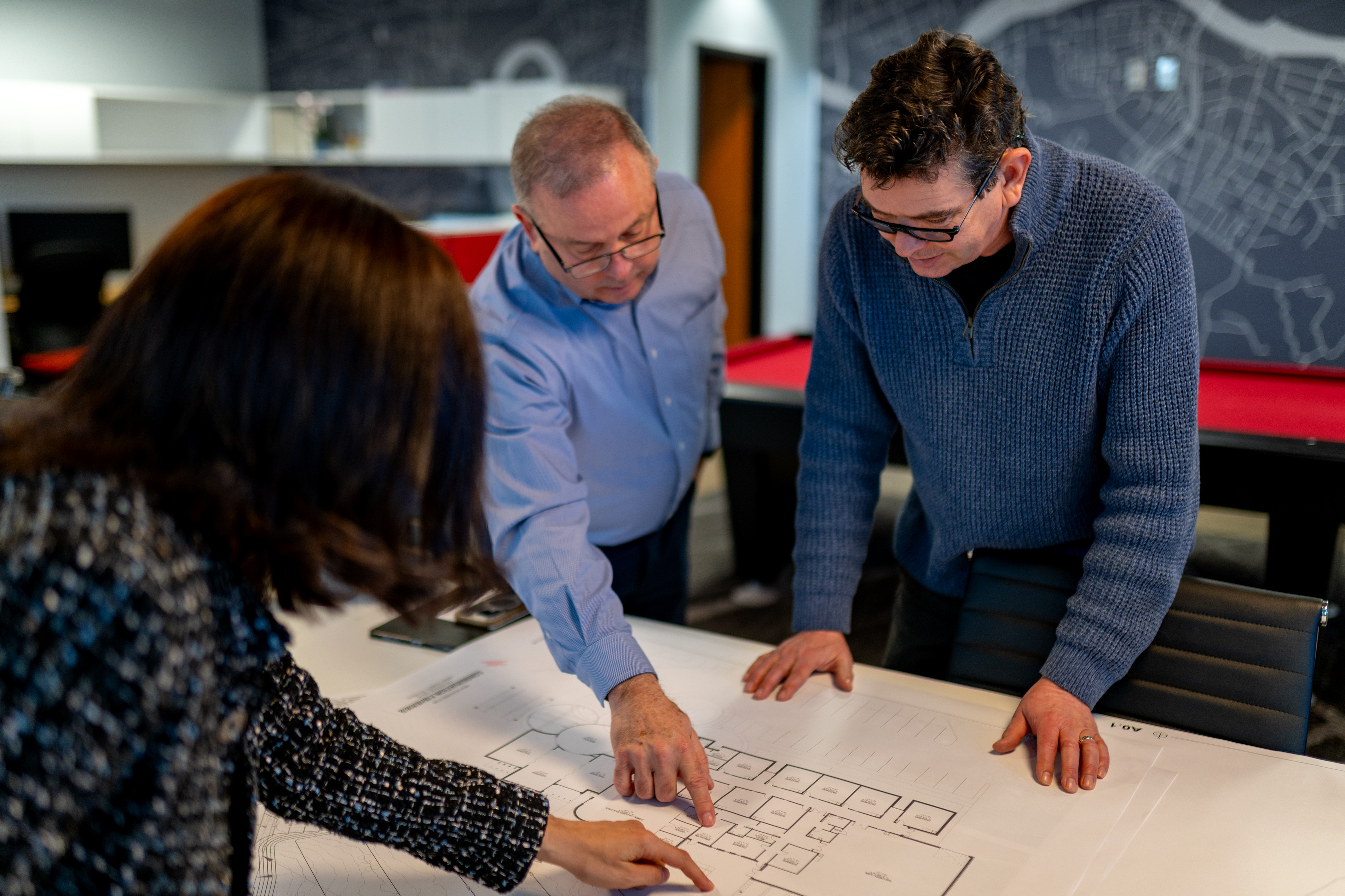
Collaboration should be at the core of any good full-service architecture and interior design firm — but even more so for mixed-use projects. The process cannot be a relay in which the architecture team does its work and then passes the baton to interior design; the most effective approach requires architects and interior designers to work alongside one another from the start. Here’s why…
2. Cohesion
Early and continued collaboration goes a long way to achieving a consistent look and feel across different uses within a property or a given space. Integrated architectural and interior design planning will result in more integrated, cohesive spaces.
Although not an exhaustive list, here are a few ways an experienced modern architecture and design firm can tie everything together:
- Variations on a theme: Even while designing for a variety of purposes, key architectural features or themes can be selectively repeated to maintain a consistent style overall.
- Thoughtful transitions: Demarcating areas with different uses while fostering effective flow and accessibility between them.
- Effective branding: Carrying key interior design motifs and/or color schemes across different spaces.
3. Flexibility
Lastly, designing for longevity demands built-in flexibility, especially in commercial properties that include retail or dining spaces, where vendor turnover is almost guaranteed. We call this flexibility “future-proofing” — for example, creating spaces with adaptable layouts, modular design, or open concepts to accommodate changing needs over time.
The GAE Architecture + Design Approach
All in all, mixed-use spaces help support strong, connected communities via better walkability, accessibility, and overall user experience beyond the building itself. It’s an honor for the GAE team to be a part of such work in East Tennessee and beyond.
With thoughtful architecture and interior design, we create connected, functional mixed-use environments for long-term success. We’re proud to serve our clients with a collaborative, cohesive, and flexible approach to every project.
If you’re a design professional looking to join a forward-looking firm driven by values like these, we’d love to hear from you! Check out our Careers page or reach out to us today.