Q&A with Design Associates: GAE’s Take on Modern Commercial Interiors
For the interior design team at GAE Architecture + Design, work is never boring (in the best sense).
Because every client is unique (and because we work on commercial projects across so many industries), no two projects are the same. That means we’re continually designing new ways to meet our clients’ needs.
To do this work well, our interior designers and interior associates have to keep up with the latest trends, integrate those with timeless principles of good design to fit each unique client, and — while we’re at it — design interior spaces that are future-ready, too. And we’re lucky enough to do this kind of work every day!
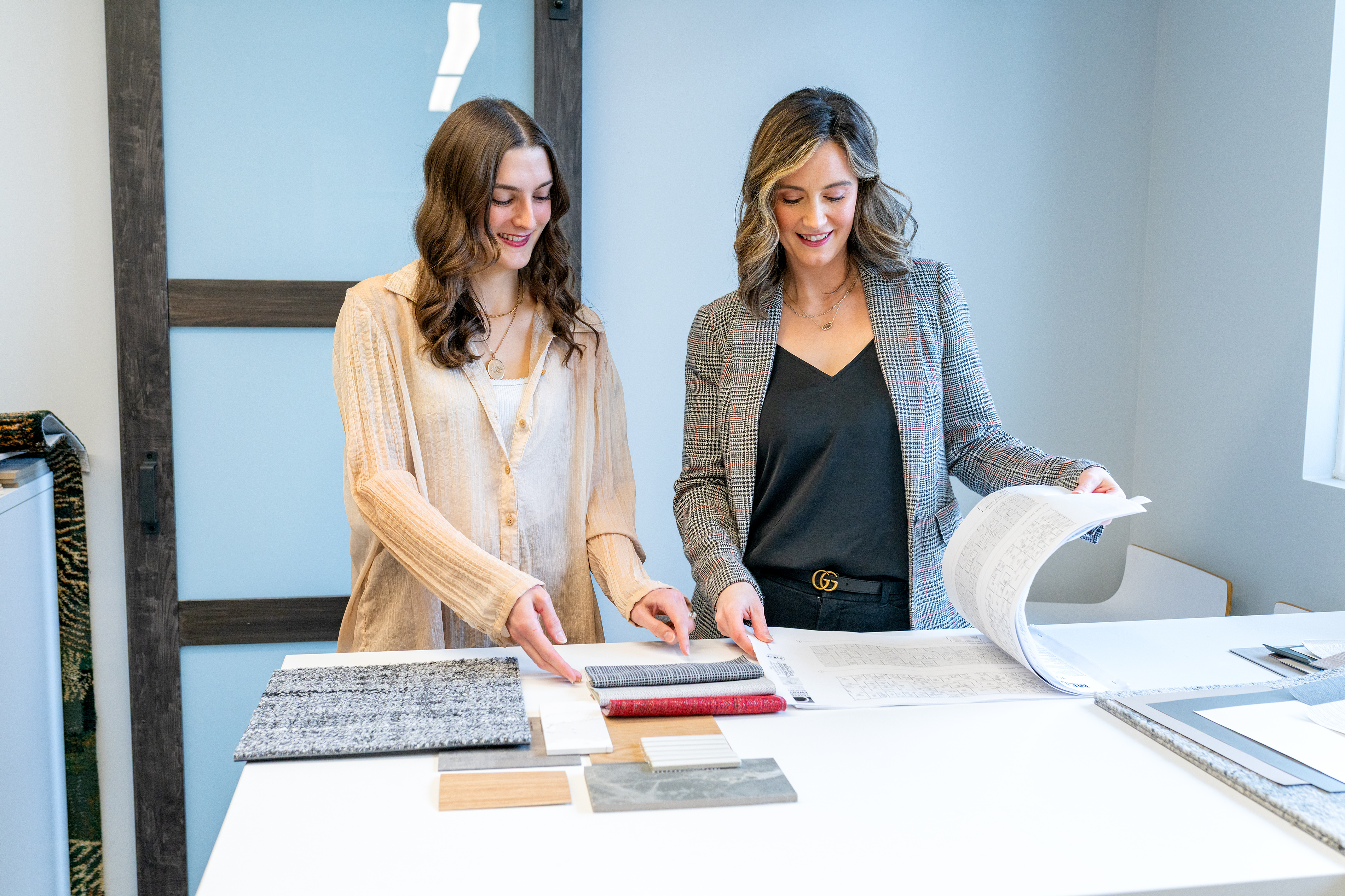
Recently, we sat down with two such lucky GAE interior experts to discuss their take on what defines modern commercial interiors, current trends, and where commercial interior design may be headed next. We spoke with Christina Fehr Brooks, Interior Designer and GAE Partner, and Abigail Reagan, GAE Interior Associate.
Q&A with Interior Design Associates Christina & Abigail
Check out what Christina and Abigail had to say about how modern commercial interiors are evolving beyond aesthetics, requiring designers to balance functionality, experience, flexibility, and brand identity in projects:
What defines a modern commercial interior today?
Abigail: “To me, a modern commercial interior isn’t about chasing trends. It’s about creating flexible, inclusive spaces that work for a variety of people and needs. That means offering a mix of private and collaborative areas (quiet vs. noisy), different seating options (formal vs. lounge), and giving users some control over their comfort and environment. The best spaces adapt over time and stay relevant long after the latest design trends have faded.”
What’s a commercial design trend you are personally excited about right now, and why?
Christina: “One design trend that has been exciting to see is the shift away from cold, sterile color palettes and cool-toned lighting toward warmer, more natural tones, use of color, materials, and textures.
While this trend has been gaining momentum for several years, it continues to help create welcoming, comfortable environments for end users. Of course, the appropriate application of any trend depends on the function of the space. As with any design trend, the most successful applications are those that thoughtfully balance the functional needs of the space with current design influences, using trends as enhancements.”
As a firm, how do you balance creating interior spaces that are both visually appealing and highly functional?
Christina: “Achieving the right balance between aesthetics and functionality begins with engaged collaboration and communication with our clients. By understanding their needs, workflows, operational requirements, and spatial relationships, we create designs that are rooted in purpose and enhance the end-user experience.
While a space can be visually appealing, it loses value if it doesn’t effectively serve its intended function. Functionality forms the foundation of our design process, with aesthetics used to strengthen and elevate the overall experience rather than compete with it.”
What’s one design element you think makes the biggest impact on how people experience a space?
Abigail: “I think ceilings are one of the most overlooked design features. To me, they’re the ‘fifth wall’ and can completely change how a space feels. Playing with ceiling heights, statement lighting, acoustic elements, and even color on exposed ductwork can add a lot of character. In a space meant to make an impression, a plain ceiling is often a missed opportunity.”
What do you think the future of commercial interior design will look like over the next few years?
Christina: “We suspect that the future will be driven by flexibility of spaces, wellness, sustainability, and the continued integration of technology into our built environment and means and methods. Our commercial environments are becoming more adaptable, allowing spaces to serve multiple functions and respond to changing needs over time.”
What do you expect to see change, and what will likely stay the same?
“A focus will remain on end user wellbeing through the integration of natural light into spaces, natural tones, and textures in spaces, and continually improving acoustics. Advances in technology will be more seamlessly integrated into the built environment, enhancing functionality without compromising aesthetics.”
Designing Successful Modern Spaces (Interiors & Exteriors) in East Tennessee
As Christina and Abigail’s insights make clear, interior design is about much more than decor. No matter what the latest design trend may be, modern commercial interiors and exteriors are most effective when they intentionally “strike the right balance” between form and function.
In Christina’s words:
“While trends will continue to evolve, our core objective of commercial interior design will remain the same — to create impactful, functional, and engaging spaces that support the people who use them every day.”
This thoughtful approach to interior design is an integral part of creating spaces (inside and out) that support both people and business goals, which is what we’re all about here at GAE Architecture + Design.
As a full-service firm, our integrated team of architects, project managers, and interior designers collaborates to ensure that the built environment and the interior design of each commercial project work in harmony.
If this sounds like work you’d also never find boring, contact us here or shoot us an email at info@georgeewart.com. We love to hear from like-minded professionals to see whether they might be a fit for our team!